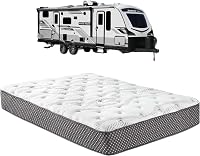
RV Bunk Mattress Size 45 x 74: What Fits
A 45 x 74 inch RV bunk mattress is wider than a standard twin (38 x 75), so a ready-made twin won't fill it without overhang. Most 45-inch-wide bunks need a custom-size mattress, often with a corner cut. Measure your bunk's usable space and doorway, then order foam cut to that footprint.
On this page (11 sections)
- What does 45 x 74 mean for an RV bunk?
- How do you measure a 45 x 74 RV bunk correctly?
- Which mattress fits a 45 x 74 RV bunk?
- What foam and firmness should you choose?
- What thickness works on a bunk?
- What about the cover and cleaning?
- Can you use a standard twin on a 45 x 74 bunk?
- How does shipping and setup work for custom foam?
- What else should you check before buying?
- What is the best choice for a 45 x 74 RV bunk?
- A tape measure and a photo of the corner notch are the two things that make the order go right.
An RV bunk mattress 45 x 74 is wider than a standard twin, so a ready-made twin won't fill the bunk without overhang. Most 45-inch-wide bunks need custom-cut foam built to that footprint, often with a corner notch.
The size matters because RV bunks are rarely square. A square mattress leaves gaps at the curve of the shell or blocks a ladder.
Measure first, then order foam cut to your numbers.
This guide covers what 45 x 74 actually means, how it compares with twin and full sizes, how to measure your bunk and doorway, and which foam choices fit the job. It also points to the memory foam bunks and larger mattress pages when you want to compare options.
What does 45 x 74 mean for an RV bunk?
45 x 74 inches means 45 inches wide and 74 inches long, and that is wider than a standard twin. A standard twin runs about 38 x 75 inches, so this bunk size adds roughly 7 inches of width and loses about an inch of length.
That extra width changes what fits. A 38-inch twin will drop into the bunk but leave a visible gap along one side, and the mattress can shift when someone climbs up.
A 45-inch mattress fills the space the bunk was built for.
Length is the smaller issue. At 74 inches, the mattress is an inch shorter than a twin, which usually leaves a small gap at the head or foot end.
Check whether the bunk has a lip or rail that holds the mattress in place.
The gap also matters for the frame. A mattress that sits loose can slide against the bunk's edge rails over time, and the exposed strip of base collects dust and crumbs.
A wide mattress that fills the frame spreads weight evenly and stays put when the RV is moving.
How a 45 x 74 bunk compares with common sizes
RV bunk sizes vary by maker, so treat the chart as a starting point, not a rule. These are the sizes you'll run into most.
| Size | Width | Length | Notes |
|---|---|---|---|
| Standard twin | 38 in | 75 in | Too narrow for a 45-inch bunk |
| RV bunk (this size) | 45 in | 74 in | Wider than a twin; often corner cut |
| RV full | 53 in | 75 in | Too wide for most bunks |
| RV short full | 48 in | 72 in | Close in width, shorter in length |
| RV queen | 60 in | 80 in or 75 in | Way too wide for a bunk |
If your bunk is close to 48 inches wide, a short full mattress might fit better than a custom cut. For that route, our guide to the best RV full mattress covers 53 x 75 and short full beds.
Larger beds move up to RV queen mattress size, which comes in 60 x 80 and 60 x 75.
Why many 45 x 74 bunks have a corner cut
A corner cut removes a triangle from one corner so the mattress clears a ladder, cabinet or the curve of the shell. It is common in bunk beds where the entry point sits at an angle.
Measure the notch carefully. Note how far it runs along each edge and whether it is on the left or right side as you face the bunk.
Custom makers ask for a photo with measurements and which corner to cut.
A square mattress forced into a corner-cut bunk will either leave a gap or bulge against the obstacle. Neither is comfortable, and the bulge can press against the bunk frame.
How do you measure a 45 x 74 RV bunk correctly?
Measure the bunk's usable space, not the old mattress. Old foam flattens and spreads over time, so its size can read wider or longer than the frame it sits on.
Use a tape measure and write down every number.
Start with the width at the widest point and the length from the inner head wall to the inner foot wall. Then measure the corner notch if there is one, along both edges.
Check the height above the mattress too. A thick mattress can crowd the bunk ceiling or make it hard to climb past a rail.
Measure from the bunk base to the nearest obstruction.
Finally, measure the doorway and the turn into the bunk area. Foam ships compressed, which helps, but the box still has to fit through.
What to write down before ordering
Keep a simple list so nothing gets missed at checkout.
- Width at the widest point of the bunk.
- Length from the head wall to the foot wall.
- Corner notch: which corner, and the length of each cut edge.
- Clearance from the bunk base to the ceiling, rail or cabinet above.
- Doorway width and any tight turn on the way in.
- The thickness you want, such as 2, 3 or 4 inches.
A photo of the bunk with the tape measure in frame helps the maker match the notch. Most custom foam orders ask for exactly that.
ZAQYCM asks for a photo with your mattress measurements and a note on whether you need a left or right corner cut. That one note prevents the most common ordering mistake, a notch shaped for the wrong side of the bunk.
If your bunk is an unusual shape and you're unsure of the size name, our guide to what size is an RV bunk mattress walks through the common bunk dimensions first.
Which mattress fits a 45 x 74 RV bunk?
Custom-cut foam is the fit for most 45 x 74 bunks, because standard sizes either run narrow or too wide. A custom maker builds the foam to your measured width, length, corner and thickness.
The alternative is trimming a ready-made foam mattress. That works in a pinch, but the cover no longer fits, the cut edge is exposed and the mattress loses its finished shape.
Custom foam arrives cut and covered.
For bunk beds specifically, memory foam is a popular pick because it packs into odd shapes and ships compressed. Our roundup of the best memory foam RV bunk mattresses covers narrow bunks in more detail.
The products below show the custom routes that match a 45 x 74 bunk. Each one is built to order rather than pulled from a shelf.
When a custom corner mattress makes sense
Pick a custom corner mattress when your bunk has a notch, a curve or a width that no standard size fills. That covers most 45 x 74 bunks.
It also makes sense when the old mattress has flattened and you want a firmer feel. A medium-firm memory foam core gives support without the soft sag of worn-out bunk foam.
When a plain custom foam slab works better
If your bunk is square at the corners, a custom rectangular foam mattress is the simpler choice. It also lets you pick a firmness and thickness more freely.
A high-density foam build suits a bunk used by kids or as a spare bed, where a firm feel and easy cleaning matter more than plush cushioning. Gel memory foam can be added on top if you want more cushioning.
What foam and firmness should you choose?
Medium firm is the safe middle for a bunk, because it supports the body without the hard feel of extra-firm foam. A medium-firm memory foam core contours to the body, cushions pressure points and helps reduce tossing and turning.
That matters on a narrow bunk. A sleeper who rolls against a hard edge wakes up more often, and a bunk's rails sit close to the mattress edge.
Memory foam softens that contact while still holding the spine in line.
Firmness also affects how the mattress handles the corner cut. Softer foam compresses into the notch, while a medium-firm core holds its shape and keeps the cut edge clean.
For sleepers who want more support, the Coaseb mattress offers a firm feel as well as medium firm. Coaseb says it supports up to 300 lbs, which suits a bunk used by adults or shared by growing kids.
The optional gel memory foam add-on adds a cushioning layer on top of the high-density base.
Side sleepers get the most from medium firm. The foam contours to the shoulders and hips, which are the points that press hardest into a bunk mattress.
Back sleepers usually do fine on medium firm or firm, depending on how much give they want.
What thickness works on a bunk?
2 to 4 inches is the usual range for RV bunk mattresses. Thinner foam keeps headroom and makes climbing in and out easier.
Thicker foam adds cushioning but eats space above the bunk.
Headroom is the deciding factor. Measure from the bunk base to the ceiling, rail or cabinet above.
Leave enough room for a sleeper to sit up and for you to change the sheets.
The ZAQYCM custom corner mattress comes in 2, 3 and 4 inch thicknesses, so you can match the bunk's clearance. Pick the thinnest option that still feels comfortable to the person using the bunk.
Weight matters too. A thick foam mattress is heavier to lift when you change the cover or clean under it.
On a top bunk, lighter foam is easier to handle.
The Coaseb mattress widens the choice further. Its thickness runs from 2 inches up to 12 inches, so a deep bunk with plenty of headroom can take a plusher build while a low bunk stays thin.
Keep the bunk's rails in mind when you pick. A mattress that sits above the rail line gives a sleeper less to hold onto.
What about the cover and cleaning?
A removable, washable cover is the practical choice for a bunk. Bunks sit close to the ceiling and collect dust, and kids eat and drink on them.
A zip-off cover makes cleaning simple.
Both ZAQYCM models include a removable knitted fabric cover with an extended zipper. You can take it off, wash it and refit it without moving the whole mattress far.
The Coaseb mattress has a machine-washable polyester cover. That matters on a bunk where spills and crumbs are common.
Check the cover's care instructions before washing. A cold, gentle cycle and line drying usually protect the fabric and the foam underneath.
An extended zipper helps here, since you can open the cover wide and slide the foam out without wrestling it through a short opening.
Can you use a standard twin on a 45 x 74 bunk?
You can, but it won't fit well. A 38-inch twin leaves about 7 inches of gap along one side of a 45-inch bunk.
The mattress can slide, and the gap collects dust and small items.
The gap also makes the bunk less comfortable. A sleeper can roll toward the edge and feel the frame through the open space.
On a top bunk with a rail, the mattress may not press against the rail properly.
A standard twin is also 75 inches long, an inch longer than 74. That extra inch can bunch at the end wall or push the mattress up at the foot.
If you already own a twin and want to try it, measure the gap first. If it's more than a couple of inches on each side, custom foam is the better buy.
How does shipping and setup work for custom foam?
Custom foam mattresses ship compressed, which makes them easier to carry through RV doors and tight hallways. Unbox the mattress, lay it flat and let the foam expand.
Expansion usually takes a few hours. A slight odor when you first open it is normal and fades within two to three days.
Air the bunk out during that time.
Don't trim or modify a custom mattress after it arrives. It was built to your measurements, so a cut would spoil the fit and the cover.
Check the fit before you put bedding on. Slide the mattress into the bunk, press it into the corner notch and confirm it sits flat without bulging.
If the foam still looks slightly off after a few hours, give it more time before judging the fit. Manual measurement also leaves a small margin of error of 1 to 3 cm, so a snug fit is normal.
What else should you check before buying?
Check the bunk frame, the ladder and the rails before the mattress goes in. The mattress needs to sit flat and stay put, especially on a top bunk.
Look at the frame for bent slats or loose supports. A wide mattress spreads weight across the frame, so a weak base shows up faster.
Check the ladder position against the corner cut. The notch should clear the ladder without leaving a gap a sleeper could catch a foot in.
Rails matter on top bunks. The mattress should sit below the rail line, not above it.
If a thick mattress raises the sleeping surface too high, choose a thinner one.
Finally, think about the person using the bunk. A medium-firm foam suits most sleepers.
People with back pain often prefer a firmer feel, but ongoing pain deserves a word with a doctor rather than a mattress change alone.
What is the best choice for a 45 x 74 RV bunk?
For most 45 x 74 bunks, a custom corner mattress is the best fit, because it matches the width and the notch in one order. The ZAQYCM Customized Medium Firm Foam RV Angled Bunk Mattress is the top pick when your bunk has a corner cut.
It's built to your measurements, comes in 2, 3 or 4 inch thickness and has a washable cover.
Choose the ZAQYCM Replacement Mattress Cut Corner RV Bunk when you want the same custom fit in a straightforward replacement. It's a close second for a square-cornered bunk or a simple swap.
Go with the Coaseb High Density Foam Mattress if your bunk is rectangular and you want more control over width, length and firmness. Coaseb says it supports up to 300 lbs and offers an optional gel memory foam layer.
Whichever you pick, measure the rv bunk mattress 45 x 74 space first. The fit depends on your bunk's real numbers, not the size name.
A tape measure and a photo of the corner notch are the two things that make the order go right.
Frequently asked questions
Is 45 x 74 the same as a twin mattress?
No. A standard twin is about 38 x 75 inches, so a 45 x 74 bunk is roughly 7 inches wider and 1 inch shorter.
That extra width means most ready-made twins sit too narrow, which is why custom-cut foam is the usual fix.
Can I cut a standard mattress down to 45 x 74?
You can trim some all-foam mattresses with a sharp knife and a straight edge, but the cover will no longer fit and the edges lose their finish. Custom-cut foam avoids that, since the maker builds the corner and cover to your measurements from the start.
Why do RV bunk mattresses have corner cuts?
Corner cuts clear ladders, cabinets, slide-out tracks and the curve of the shell. A square mattress pushed into those spots leaves a gap or blocks the bunk.
Measure the notch and tell the maker which corner to cut, left or right.
How thick should an RV bunk mattress be?
Many bunk mattresses are 2 to 4 inches thick. Thinner foam saves headroom and keeps climbing in and out easy; thicker foam adds cushioning but can crowd the bunk's ceiling and rails.
Check the clearance above the mattress before choosing.
What should I measure before ordering a 45 x 74 bunk mattress?
Measure the bunk's usable length and width at the widest point, the corner notch, the clearance to the ceiling and cabinet, and the doorway the mattress must pass through. Compressed foam ships flat-packed, so a tight doorway is less of a problem than a tight bunk.