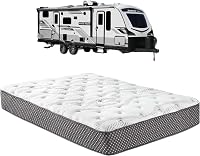
RV Bunk Mattress Size 30 x 72: What Fits
A 30 x 72 RV bunk mattress is a 30-inch-wide, 72-inch-long pad, the size many Class C over-cab bunks, bunkhouse bunks and camper cots use. Measure your bunk platform inside edge to edge first, because 30 x 75 and 28 x 72 bunks are close cousins that won't swap cleanly.
On this page (11 sections)
- What does 30 x 72 mean for an RV bunk mattress?
- Which RVs use a 30 x 72 bunk mattress?
- What other sizes fit close to 30 x 72?
- Which mattress materials suit a narrow bunk?
- How thick should a 30 x 72 bunk mattress be?
- What to check before ordering an RV bunk mattress 30 x 72
- Which 30 x 72 bunk mattresses fit best?
- Do 30 x 72 bunks need a special sheet size?
- How do you care for a foam bunk mattress?
- What else should you know about RV bunk mattress sizes?
- The bottom line on RV bunk mattress 30 x 72
A 30 x 72 RV bunk mattress is a narrow bunk pad 30 inches wide and 72 inches long. It's shorter and narrower than a twin, which is why standard twin bedding doesn't fit it well.
This size shows up in Class C over-cab bunks, bunkhouse travel trailers and some camper cots. A replacement isn't a universal part, though.
Measure your platform first, because 30 x 75 and 28 x 72 bunks look similar but won't take the same pad.
The guide below covers who uses this size, what else fits close to it, and how to order the right bunk mattress the first time. It ends with the picks we'd start with for a 30 x 72 platform.
What does 30 x 72 mean for an RV bunk mattress?
30 x 72 means 30 inches across and 72 inches long, measured on the mattress itself rather than the bunk frame. That makes it a narrow, short pad built for tight sleeping spaces.
For context, a standard twin is about 38 x 75 inches. A 30 x 72 bunk gives up roughly 8 inches of width and 3 inches of length, so it sleeps one person and leaves little room to sprawl.
The 72-inch length suits shorter sleepers and kids better than tall adults. If you're over about 6 feet, your feet will likely reach the end, and you may want the 30 x 75 version instead.
Thickness varies by maker. Most bunk replacements land between 5 and 8 inches, and the right figure depends on how much headroom your bunk has above the mattress.
Measure the platform, not the old mattress. An old pad that has squashed and spread over the years can read wider than the frame it sits on.
Which RVs use a 30 x 72 bunk mattress?
Class C over-cab bunks and bunkhouse trailers are the most common homes for a 30 x 72 pad, though the size also turns up in camper cots and some toy haulers. It's a builder's choice, not an industry standard.
A few patterns come up again and again. Check yours against these before you order:
- Class C over-cab bunk: often around 30 inches wide with a short length to clear the cab roof slope.
- Bunkhouse travel trailers: the upper or lower bunk in a dedicated bunk room may run 30 x 72 rather than a full 30 x 75.
- Camper cots and folding beds: a 30-inch cot pad is close to this size and sometimes sold as a bunk replacement.
- Toy haulers and conversion vans: fold-down or slide-out bunks can land near 30 x 72.
None of these is guaranteed. Two trailers from the same brand and model year can ship with different bunk cushions, so the only reliable check is your own tape measure.
How to measure your bunk platform
Measure the inside clear space of the bunk frame, corner to corner. Take width at the head, middle and foot, then length on both sides.
Write down the smallest width and the shortest length. Those are the figures your new mattress has to fit, since foam won't compress into a frame that's too tight.
Also measure the height from the platform to the ceiling or the underside of the upper bunk. That number decides how thick your replacement can be without leaving you hunched.
If your bunk is closer to 30 x 75, our guide on what size is an RV bunk mattress walks through the nearby sizes and how they differ. It's the fastest way to confirm whether you have the short 72-inch bunk or the longer version.
What other sizes fit close to 30 x 72?
Several sizes sit within a few inches of 30 x 72, and the gap or overhang decides whether they work. A 30 x 75 pad is the closest cousin, but it's not a straight swap.
Here's how the near-misses compare:
| Size | How it differs from 30 x 72 | When it works |
|---|---|---|
| 30 x 75 | 3 inches longer | Solid platform with room at the foot |
| 28 x 72 | 2 inches narrower | Tight frame where 30 inches binds |
| 30 x 80 | 8 inches longer | Long bunks and taller sleepers |
| 38 x 75 twin | 8 inches wider, 3 longer | Only if the bunk frame is actually twin width |
A 30 x 75 mattress on a 30 x 72 platform will overhang at the foot or push against the wall. That's fine on some bunks and awkward on others, especially where a ladder or rail sits at the end.
Going narrower, a 28 x 72 pad leaves a 2-inch strip of bare platform along one side. On a bunk with a rail it's usually harmless, but on an open cot it can feel like sleeping near an edge.
A full 38 x 75 twin only belongs on a bunk built to twin width. Many RV bunks are not, which is why the 30-inch pad exists in the first place.
If your frame really is full width, see our picks for the best RV full mattress.
Don't buy by name alone. "RV bunk" and "cot size" get used loosely, so match the inches on the label to the inches you measured.
Which mattress materials suit a narrow bunk?
Foam is the practical choice for a 30 x 72 bunk, because it bends around corners, trims to size and comes in the short lengths bunks need. Innersprings in this size are rare.
Memory foam and gel foam are the most common bunk replacements. They ship rolled and boxed, so they fit through a camper door and up a ladder far more easily than a rigid mattress.
Gel-infused foam is the version most makers push for bunks. FoamRush says its gel layer is designed to pull heat away from the body, which matters in a small, poorly ventilated bunk area.
A foam pad also lets you fix a size mismatch. If your platform reads 30 x 71 or 30 x 73, a foam bunk mattress can be trimmed to fit where a ready-made mattress cannot.
The trade-off is support. A 6-inch foam bunk pad is soft enough for kids and light adults, but a heavier sleeper may want 7 inches or more for a firmer feel.
If you want the fuller picture of foam options for narrow bunks, our roundup of the best memory foam RV bunk mattresses compares the leading pads by size, thickness and price tier.
Gel foam vs plain foam on a bunk
Gel foam adds a cooling layer on top of a denser base. FoamRush builds its 7-inch bunk from ventilated gel memory foam over high-density support foam, which gives a medium feel.
Plain foam is simpler and usually cheaper, but it won't have the heat-shedding layer that gel foam offers in a stuffy bunk. Pick gel for hot sleepers and top bunks.
How thick should a 30 x 72 bunk mattress be?
The right thickness is the thickest pad your bunk's headroom allows, minus a couple of inches of breathing room. Most RV bunks land between 5 and 8 inches.
Start with the clearance figure you measured earlier. On a top bunk with a low ceiling, a 6-inch pad is usually the safer pick, while a bottom bunk with open space above can take 7 or 8 inches.
Thicker foam gives more cushioning and better pressure relief. It also raises the sleeping surface, which can matter on bunks with a safety rail or a ladder that hooks over the edge.
Weight is part of the calculation too. A 7-inch foam bunk pad is heavier to lift when you change the bedding or flip the mattress, and on a top bunk that weight has to be managed safely.
FoamRush's 7-inch bunk weighs about 8.44 kg. That's a two-person lift up a ladder for most people, so plan how you'll get it into place.
Go thinner for headroom, thicker for comfort. If the bunk has a hard rail or a low ceiling, don't trade headroom for a plusher pad.
What to check before ordering an RV bunk mattress 30 x 72
Before you order, confirm the length, the width and the cover situation, in that order. A pad that's right on two counts and wrong on the third still won't fit.
Length is the first thing to check. A 72-inch bunk takes a 72-inch pad, and a 75-inch bunk needs the longer version.
This is the mismatch that catches most buyers.
Width comes next. Measure the narrowest point of the frame, not the widest, since the mattress has to slide into the tightest spot.
Then check the cover. Many bunk replacements ship as bare foam with no cover, and the maker may charge a restocking fee on returns.
FoamRush sells its bunk as gel foam only and notes that a cover is not included.
Finally, think about bedding. A 30 x 72 pad is narrower than a twin, so standard twin sheets will bag and slip.
Cot-size or bunk-size sheets fit better, and a waterproof protector helps on kids' bunks.
One practical line: check the exact inches before you order, because bunk sizes get labelled loosely. A tape measure and five minutes beats a return.
Which 30 x 72 bunk mattresses fit best?
The best 30 x 72 bunk mattresses match the platform length exactly and ship in a thickness your headroom allows. Two gel foam pads and one protector cover most buyers here.
The FoamRush 7-inch is the pick for most people. It's the thicker option, and it's cut to the 30 x 72 size this guide covers.
FoamRush builds it as a layer of ventilated gel memory foam over high-density support foam, with a medium feel. The gel layer is designed to limit heat build-up in a small bunk.
Because it's plain foam, you can trim it if your platform runs a little short. FoamRush says it slices easily with a sharp knife or an electric foam cutter.
The cover isn't included, so budget for one.
The FoamTouch 6-inch is the slimmer, lower-cost alternative. It suits a top bunk where headroom is tight and you don't want the pad to eat into the ceiling gap.
FoamTouch glues 1 inch of gel memory foam onto 5 inches of high-density charcoal foam. The denser base holds its shape under a lighter sleeper, and the medium-firm feel suits kids and lighter adults.
At 6 inches it leaves more headroom than the FoamRush pad. The trade-off is less cushioning, and it ships rolled and boxed, so FoamTouch says to lay it flat for up to 5 days to regain its full shape.
The Kingnex protector isn't a mattress. It's the waterproof layer that keeps a foam bunk pad dry, and it fits the 30 x 75 narrow bunk size with up to 14 inches of depth.
The Kingnex has a TPU membrane on the underside that blocks liquids, and a bamboo-viscose jersey surface that Kingnex says wicks moisture and feels cool. It's thin, so it doesn't change how the foam beneath it feels.
It fits a 30 x 75 bunk snugly. On a 30 x 72 platform it will stretch over the extra length, so expect a little slack at the foot.
That's usually fine on a solid bunk base.
Pick the FoamRush 7-inch for comfort, the FoamTouch 6-inch for headroom, and the Kingnex to protect either one. That trio covers the size, the fit and the upkeep.
Do 30 x 72 bunks need a special sheet size?
A 30 x 72 bunk needs bunk-size or cot-size sheets, not standard twin sheets. Twin sheets are about 8 inches too wide and will bunch under you all night.
Look for sheets sold for RV bunks, camper bunks or narrow twins. Some brands label a 30 x 75 fitted sheet as "narrow twin" or "cot size," and those stretch over a 30 x 72 pad with a bit of slack.
If you can't find the exact size, a fitted sheet made for a 30-inch cot will usually do. Tuck the excess under the mattress rather than leaving it loose, especially on a top bunk.
A mattress pad or protector under the sheet adds a layer of protection and helps the sheet grip. The Kingnex protector above is cut for the 30 x 75 narrow bunk and adds a waterproof barrier.
Don't force a twin sheet onto a 30-inch bunk. It won't stay tucked, and the loose fabric is a trip hazard on a bunk ladder.
How do you care for a foam bunk mattress?
Foam bunk mattresses last longer with regular airing, a waterproof cover and spot cleaning, and they don't need flipping the way an innerspring does. A few habits keep a 30 x 72 pad usable for years.
Start with a protector. A waterproof cover like the Kingnex keeps spills, sweat and condensation out of the foam, which is the main thing that shortens a foam pad's life in a camper.
Air the bunk when you can. Foam holds moisture, and a camper that sits closed up can get damp, so open the windows and let the bunk breathe on dry days.
Spot clean stains with a mild soap and a damp cloth, then let the foam dry fully before putting bedding back on. Don't soak a foam pad or machine wash it unless the maker says it's safe.
Check the pad every season for sagging, cracks or a musty smell. If the foam has flattened where you sleep, it's time for a replacement rather than another topper.
Protect the foam and it will outlast the camper. That's the whole care routine for a bunk pad.
What else should you know about RV bunk mattress sizes?
The 30 x 72 bunk sits in a family of narrow RV sizes that includes 30 x 75, 28 x 72 and the wider short queen. Knowing where your bunk falls helps you buy the right pad and the bedding that goes with it.
The short queen is the big one to know about. It's 60 x 75 rather than a full 60 x 80, and many RVs use it in the main bedroom while bunks use the 30-inch pads.
Our RV queen mattress size guide covers that 60 x 80 versus 60 x 75 split.
Bunk sizes also vary by builder. A trailer that lists a "bunkhouse" may still use 30 x 75 pads, and a Class C over-cab bunk may run narrower than 30 inches.
Measure every bunk in the rig before you order replacements for all of them.
If you're replacing several mattresses at once, order the longest bunk first. A pad that's too long can be trimmed in foam, but one that's too short can't be stretched.
Measure each bunk separately. The sizes in one camper aren't always the same, and a mixed order saves you from returns.
The bottom line on RV bunk mattress 30 x 72
A 30 x 72 RV bunk mattress is the short, narrow pad for over-cab bunks and bunkhouse bunks, and it isn't the same as a twin. Measure your platform inside edge to edge, confirm whether you need the 72-inch or 75-inch length, then choose a foam pad in a thickness your headroom allows.
For most 30 x 72 bunks, the FoamRush 7-inch gel foam is the pad we'd start with. It's cut to the size, it's medium feel, and it can be trimmed if your platform runs short.
Pick the FoamTouch 6-inch if headroom is tight, and add the Kingnex protector to keep either one dry.
If your bunk measures closer to 30 x 75, or you're sizing the main bedroom too, read our guide on what size is an RV bunk mattress and our RV queen mattress size breakdown before you order. A tape measure now saves a return later.
Frequently asked questions
Is a 30 x 72 mattress the same as a twin?
No. A 30 x 72 RV bunk is much narrower and shorter than a standard twin, so twin sheets won't fit it snugly.
A twin is roughly 38 x 75 inches, while this bunk size loses about 8 inches of width and 3 inches of length.
What is a 30 x 72 bunk called in stores?
You'll usually see it sold as an RV bunk mattress, a camper bunk mattress or a replacement bunk pad. Some listings also call it a cot-size mattress when the width is 30 inches and the length is close to 72 to 75 inches.
Can I cut a larger foam mattress down to 30 x 72?
Yes, if the foam is a plain slab. FoamRush says its bunk foam can be sliced with a sharp knife or an electric foam cutter and trimmed to fit.
A mattress with coils, a sewn cover or a zipped shell is much harder to resize at home.
How thick should an RV bunk mattress be?
Match the thickness to your bunk's ceiling clearance. A 6-inch bunk mattress leaves more headroom on a top bunk, while a 7-inch one gives a little more cushioning.
Check the clearance above the mattress before going thicker.
Will a 30 x 72 mattress fit a 30 x 75 bunk?
It leaves a 3-inch gap at the foot, which may be fine on a solid platform but is not a snug fit. A 30 x 75 mattress won't fit a 30 x 72 platform without overhang or trimming.
Measure before ordering.