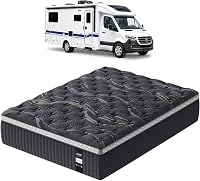
How to Prevent Moisture Under an RV Mattress
To prevent moisture under an RV mattress, let air move between the mattress and its base, and check both surfaces regularly. Dry any damp area before making the bed again, and look for leaks or trapped condensation if moisture returns.
On this page (8 sections)
- How do you prevent moisture under an RV mattress?
- Why does an RV mattress get wet underneath?
- What can you do each week to keep the bed dry?
- Do airflow underlays help prevent mattress dampness?
- Can an underlay with a support board help?
- Does a waterproof protector prevent moisture underneath?
- What should you do if you find moisture?
- How to prevent moisture under an RV mattress: what should you choose?
To prevent moisture under an RV mattress, create airflow between the mattress and its base, inspect both surfaces, and dry them when damp. If wetness keeps returning, check for a leak or a source of condensation instead of relying on a cover alone.
RV beds often sit on solid platforms with little room for air to circulate. Temperature changes and humid air can leave moisture trapped underneath, so a simple routine of lifting and checking the mattress can help you spot a problem early.
How do you prevent moisture under an RV mattress?
Keep the mattress underside and bed platform dry, and give air a path between them. Lift the mattress for a short airing when you can, especially after a damp night or a sharp change in temperature.
Check the platform and mattress underside for damp spots, musty odors, or discoloration. Dry the surfaces fully before putting the mattress back, and remove bedding if it is damp too.
If moisture returns in the same place, look around windows, roof seams, plumbing, and nearby walls for signs of a leak. An underlay may help with airflow, but it cannot repair a water entry point.
Why does an RV mattress get wet underneath?
Condensation and limited airflow are common reasons for moisture under a mattress. Warm, humid air can meet a cooler mattress or bed base, while a close-fitting mattress and solid platform leave little space for the moisture to disperse.
A leak can look similar at first. Check whether the damp area extends beyond the mattress footprint or appears near plumbing, a window, or an exterior wall.
Do not assume every damp patch is harmless condensation. Persistent wetness or spreading discoloration calls for finding and fixing the source before you cover the area.
How can you tell condensation from a leak?
Look at where the moisture appears and whether it returns after drying. Condensation may show across a broad area where air is trapped, while a leak may be concentrated near a seam, pipe, window, or wall.
These clues are not proof by themselves. Dry the area, check nearby surfaces, and inspect again after the next trip or temperature change.
What can you do each week to keep the bed dry?
Make a quick underside check part of your RV care routine. Lift a mattress corner, feel the platform, and let the mattress air if either surface feels damp.
Keep bedding dry and avoid storing wet clothing or towels on the bed. Leave space around the bed base where possible so air can circulate through the sleeping area.
If your RV will sit unused for a while, follow the steps in how to protect an RV mattress in storage. A cover can help during storage, but the mattress and platform should be dry before you cover them.
Do airflow underlays help prevent mattress dampness?
An underlay can lift the mattress and create a ventilated space beneath it. This can help air circulate at the bed base, though it does not stop leaks or remove the need to inspect for moisture.
The DuraDri Mattress Underlay uses a dimpled polypropylene design that creates airflow and raises the mattress by ¾ in.
Check the bed dimensions and available clearance before choosing an underlay. The DuraDri is listed in King size, so confirm that its size suits your RV bed.
The Safoner RV Mattress Underlay Moisture Barrier uses breathable 3D mesh to create an airflow space, with four elastic corner bands to help keep it in place.
Safoner offers RV-specific dimensions, including short queen and king. Match the size to your bed before ordering, since RV mattress dimensions can vary.
Can an underlay with a support board help?
An underlay with a support board may suit a bed where you want airflow and a firmer base. Check that the size and construction fit your platform before choosing one.
Hogarjal's RV Underlay With Support Board has a 3D open-grid design and four straps that attach around the mattress. Its stated dimensions are 60 x 80 in, so measure your bed carefully.
This option is sized for a 60 x 80 in bed. It may not suit a short queen or other RV bed size without a proper fit.
If the mattress itself is uncomfortable, airflow alone won't address that. Compare options in how to make an RV mattress more comfortable, and check that any topper still leaves enough room for the bed frame or nearby cabinets.
Does a waterproof protector prevent moisture underneath?
A waterproof protector helps guard against spills on the mattress, but it does not ventilate the mattress underside. Pair it with airflow and regular checks if your concern is dampness between the mattress and platform.
The Kingnex Waterproof RV Short Queen Protector has a fitted-sheet style with a TPU backing and is sized for a 60 x 75 in RV short queen. Its stretch skirt fits mattresses up to 14 in deep.
Use a protector when spills are a concern, and wash it as needed according to its care instructions. For a closer look at the difference between surface protection and ventilation, read do you need a mattress protector in an RV?.
What should you do if you find moisture?
Remove bedding, lift the mattress, and dry both the mattress underside and platform. Keep the bed open until the surfaces feel dry, then inspect nearby areas for leaks or other water sources.
Do not put a damp mattress back on a damp base. If the mattress remains wet, follow its care guidance and avoid sealing in moisture with a protector or storage cover.
For recurring dampness, check the RV for leaks and improve ventilation around the bed where possible. A cooling RV mattress topper may change how warm the sleep surface feels, but it is not a fix for moisture beneath the mattress.
How to prevent moisture under an RV mattress: what should you choose?
To prevent moisture under an RV mattress, start with regular checks and airflow under the bed. Choose an underlay if you need a ventilated layer, and add a waterproof protector if you also want a barrier against spills.
DuraDri offers a dimpled polypropylene airflow design, Safoner has breathable mesh and corner straps, and Hogarjal combines an open-grid underlay with a 60 x 80 in support board. Choose by fit and the features that match your bed.
If you have an RV short queen and want spill protection, the Kingnex protector is sized for 60 x 75 in. Measure your mattress and platform first, then address any recurring leak before adding layers.
Frequently asked questions
Why does moisture collect under an RV mattress?
Moisture can collect when humid air or condensation gets trapped between the mattress and a cool, poorly ventilated bed base. A roof, window, or plumbing leak can also cause dampness.
Check the mattress underside and nearby surfaces to find whether the moisture is limited to the bed base or comes from another source.
How often should I check under an RV mattress?
Check under the mattress regularly, especially after humid weather, temperature changes, storage, or a leak. Lift it enough to inspect the underside and bed platform, then let both surfaces air out if they feel damp.
A recurring wet patch needs a closer check for leaks or ventilation problems.
Does a waterproof mattress protector stop moisture underneath?
A waterproof protector can help shield the mattress top and sides from spills, but it doesn't create airflow beneath the mattress or fix condensation at the bed base. For moisture underneath, improve ventilation and investigate the source.
Use a protector as a separate layer of spill protection.
Can an underlay prevent all RV mattress moisture?
An airflow underlay can create space for air to move below the mattress, which may help reduce trapped dampness. It cannot stop every source of water, such as a plumbing leak or roof leak.
Keep checking the bed base and repair leaks promptly if moisture returns.